
CM4 / CM5 Gateway Carrier Board
Ready for prototype manufacturingA carrier board for the Raspberry Pi Compute Module 4 and Compute Module 5, designed for industrial gateway and edge roles.
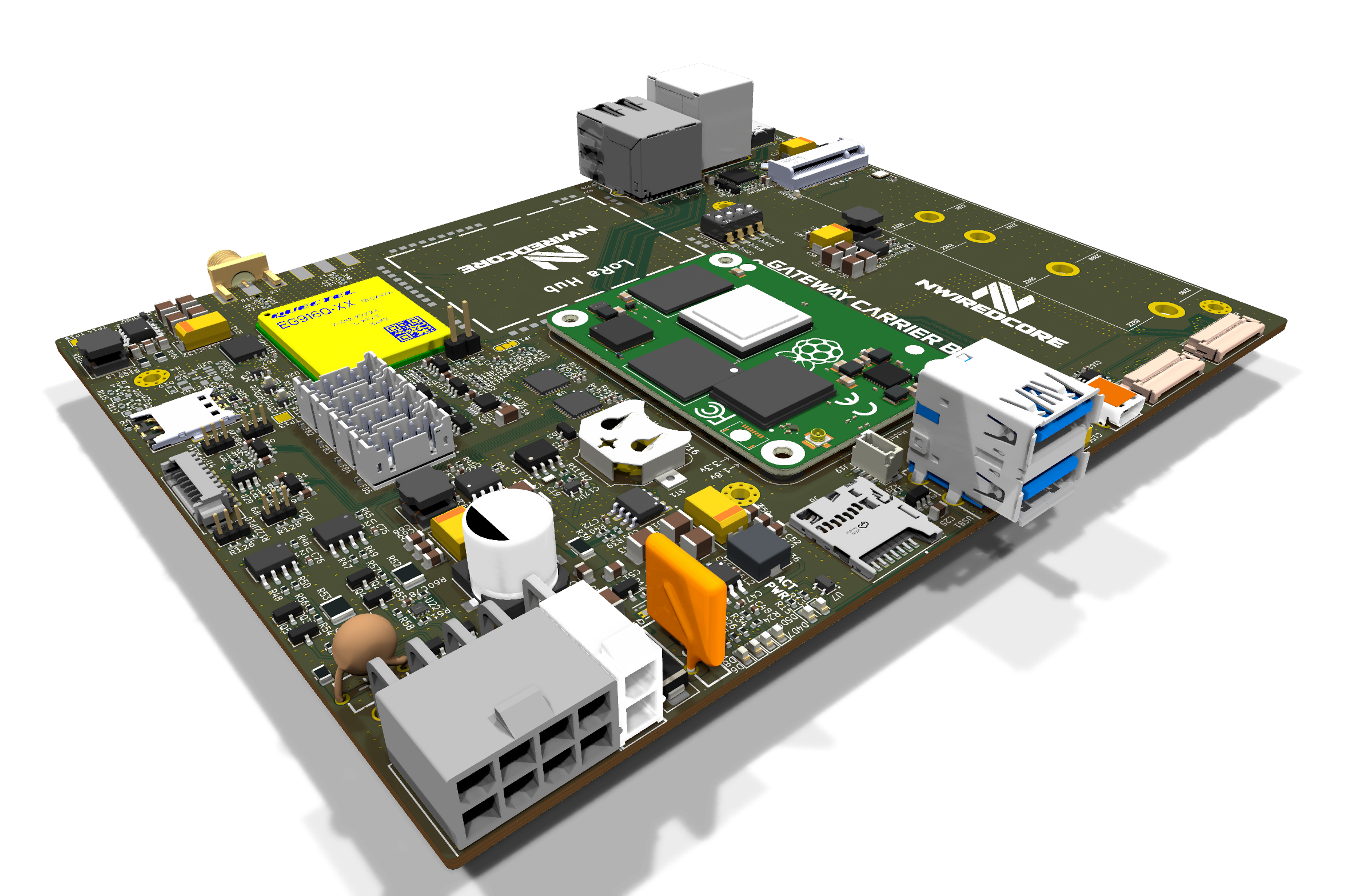
Shown with Raspberry Pi Compute Module 4 installed. The carrier board supports CM4 and CM5; Compute Module is not included.
What it is
The CM4 / CM5 Gateway Carrier Board turns a Raspberry Pi Compute Module into a wired-and-cellular industrial gateway. It pairs Gigabit Ethernet and NVMe / microSD storage with an LTE modem (Nano-SIM plus an onboard eSIM IC), two independent RS-485 ports, universal and vibration sensor inputs, and MIPI camera / display plus micro-HDMI, on a board built around a wide industrial DC input. The base configuration shown uses an LTE modem without GNSS; GNSS is available through a compatible LTE / GNSS modem variant. Engineering design is complete — schematic, PCB layout and the manufacturing package (Gerbers, BOM, CPL) — and the board is ready for prototype manufacturing. No prototypes have been built or tested yet.
Configurations
The Gateway Carrier Board is the base product. It has no onboard LoRa. GNSS can be added either through a compatible LTE / GNSS modem or through the separate NWIREDCORE LoRa Hub. Multi-channel LoRa connectivity is provided only by the separate LoRa Hub.
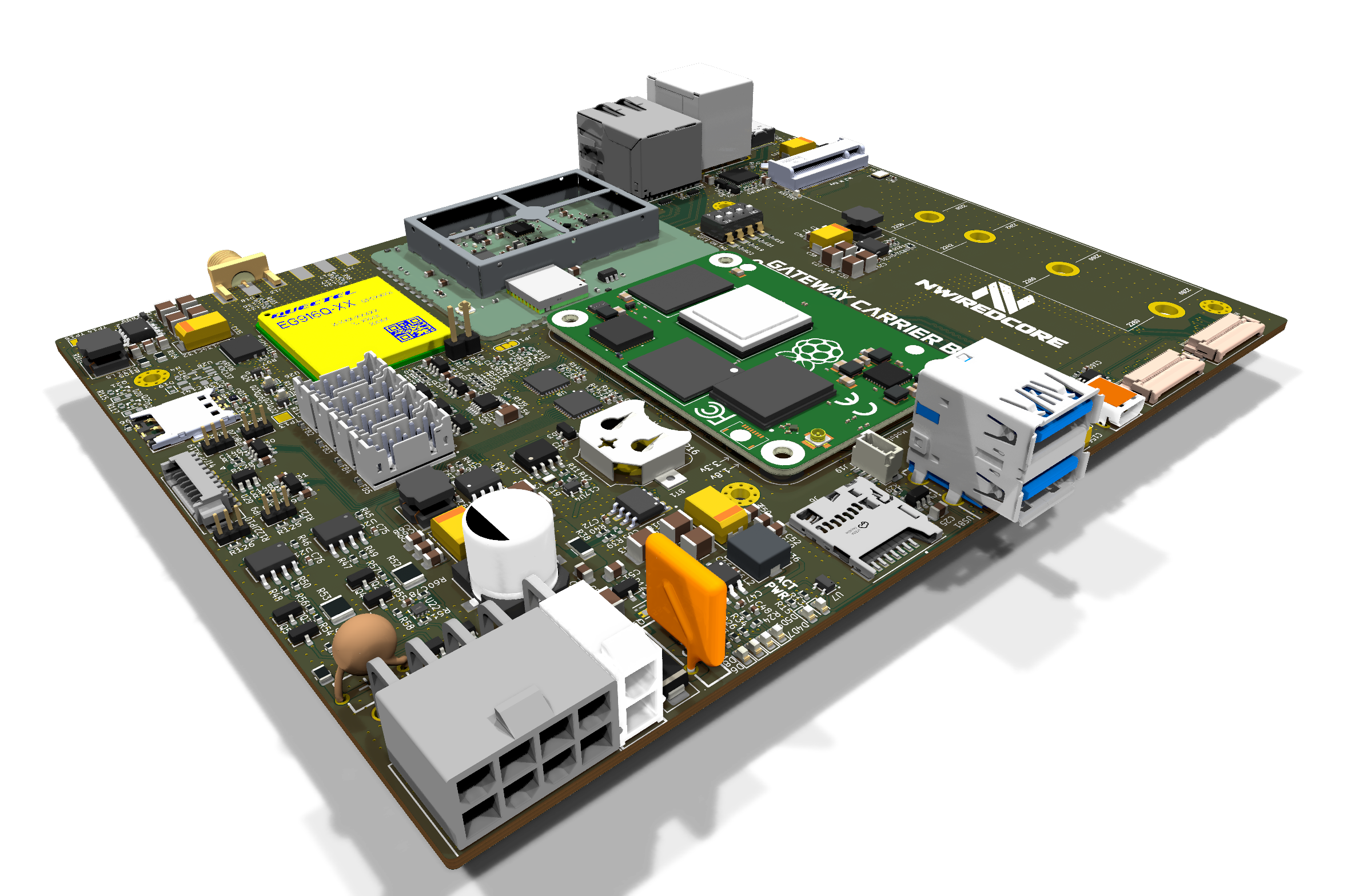
The LoRa Hub is a separate companion module and is not included in the base Gateway configuration.
Board views
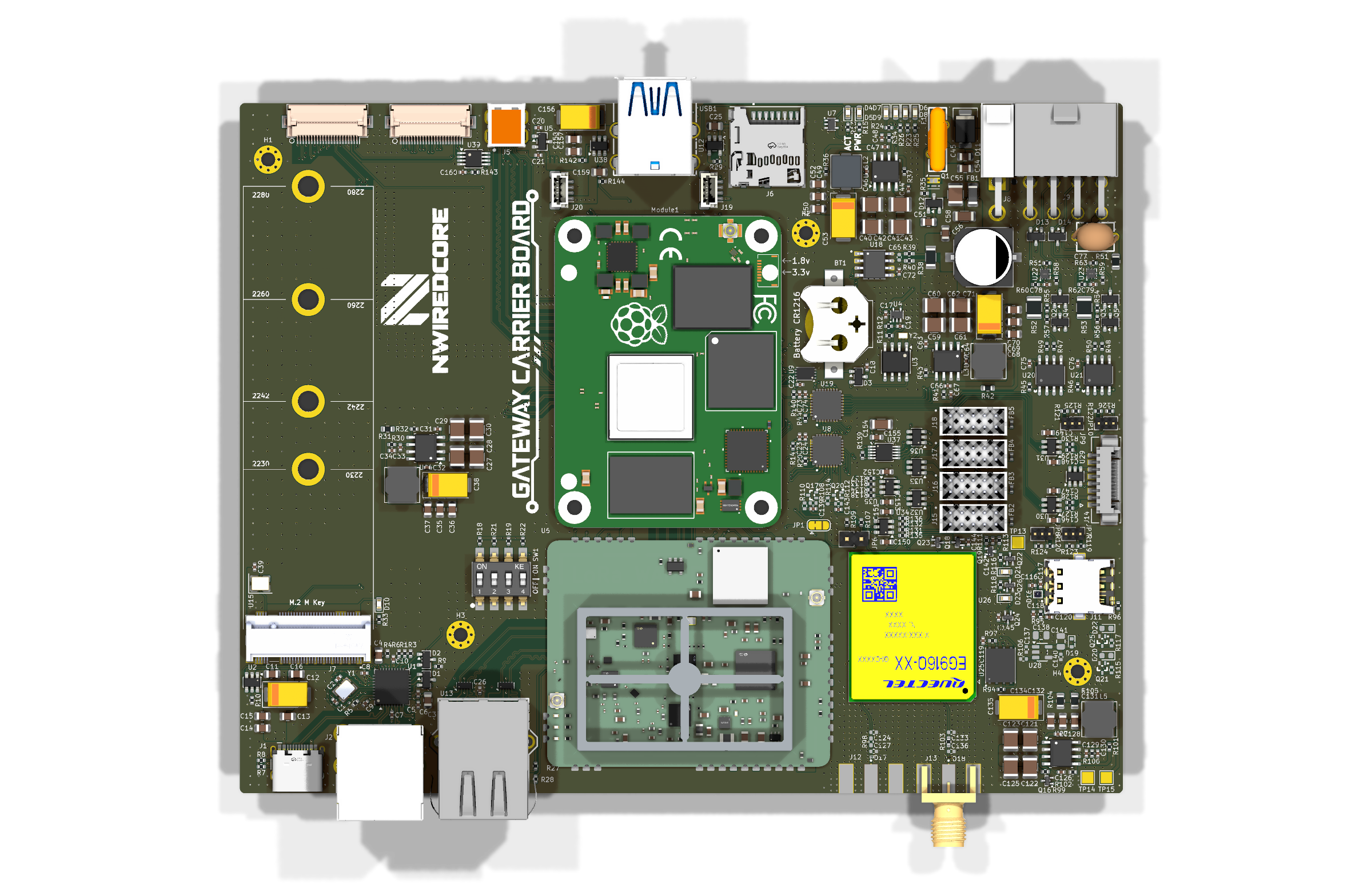
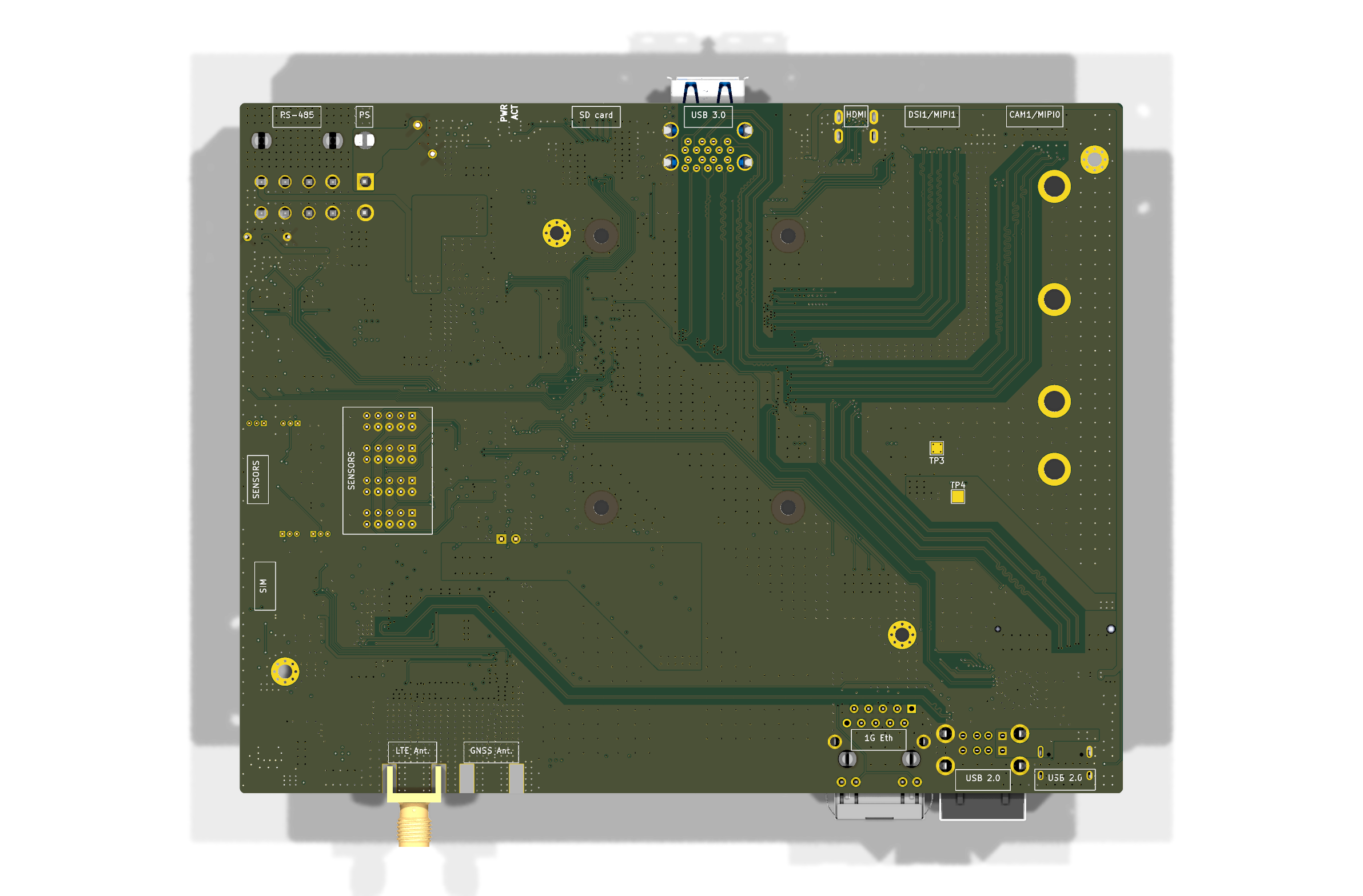
Top and bottom of the board (KiCad ray-traced renders). The LoRa Hub is a separate companion module.
Main features
Current design intent. Individual items may still change during prototype bring-up and validation.
- 01Raspberry Pi Compute Module 4 / 5 (CM4 / CM5)
- 02Gigabit Ethernet
- 03LTE modem — Nano-SIM + onboard eSIM
- 04M.2 NVMe SSD, 2280 + microSD
- 052 × independent RS-485 ports
- 064 × universal digital sensor inputs
- 074 × dedicated vibration sensor inputs
- 08Industrial DC input, approx. 7.5–24 V DC
- 093 × USB 2.0 — 2 × Type-A + 1 × Type-C
- 102 × USB 3.0 Type-A with CM5
Current design specification
Current design specifications. Some details may change after prototype bring-up and validation.
Compute & storage
- Raspberry Pi Compute Module 4 / 5 (CM4 / CM5)
- M.2 NVMe SSD, 2280
- microSD
Network & connectivity
- Gigabit Ethernet
- LTE modem
- Nano-SIM holder
- Onboard eSIM IC
- LTE antenna connector
- Current Gateway modification: no GNSS
- Optional GNSS with a compatible LTE / GNSS modem variant
- 2 × USB 2.0 Type-A
- 1 × USB 2.0 Type-C
- 2 × USB 3.0 Type-A when CM5 is installed
Field I/O & sensors
- 2 × independent RS-485 ports
- 4 × universal digital sensor inputs
- 4 × dedicated vibration sensor inputs with programmable trigger threshold
Display / camera
- Micro-HDMI
- MIPI camera / display connectors
Power
- Industrial-oriented DC input
- Approximately 7.5–24 V DC design range
Intended applications
Target use cases for the design. This is not a claim of commercial deployment.
- Industrial gateways
- IoT gateways
- Remote monitoring
- Telemetry
- Edge computing
- Automation
- Custom embedded systems
Roadmap
- ArchitectureCompleted
Block diagram, interface allocation and power tree fixed.
- SchematicCompleted
Full capture complete — compute module, power, Ethernet, LTE, USB, RS-485 and sensor interfaces.
- PCB LayoutCompleted
Board outline, stack-up, placement and routing complete.
- Manufacturing packageCompleted
Gerber files, BOM and CPL / placement files complete — ready for factory quoting.
- Prototype manufacturingNext step
Next milestone: board fabrication and parts procurement.
- Assembly and bring-upUpcoming
Board assembly, then power, boot and interface checks on the first units.
- Hardware testing and validationUpcoming
Ethernet, LTE, USB, RS-485, sensor I/O, power range and thermal checks against the design intent.
- Design revision if requiredFuture
Any fixes found during bring-up and testing folded into a revised board.
- Pilot / small production batchFuture
The engineering design package is complete: schematic, PCB layout and manufacturing outputs (Gerber files, BOM and CPL / placement files). The next milestone is prototype fabrication, assembly and bring-up. Specification values above are the current design intent and may still change during bring-up and validation.
Interested in this project?
Register your interest to receive prototype, testing and future availability updates. No payment or purchase commitment.
Prefer email? contact@nwiredcore.com